
Environmental-Driven Making
Design: Hangchuan Wei, instructed by Richard Beckett & Marjan Colletti Location: Hong Kong University, Hong Kong
The design project is published in CAADFutures 2025 conference in Hong Kong University. This study exploits an engineering-artist approach towards integrating environmental-driven design with ceramic 3DP to produce surfaces with conditions, where environmental information from simulation is pre-programmed to instruct the fabrication process by controlling tool paths and 3DP parameters in the generative framework. In the design prototyping, airflow data informs the geometry and texture of wall tiles produced using the generative framework. The application of the generative framework is conceptualised under the context of designing niches for micro-organisms to colonise, which is potentially able to improve the indoor microbiome for occupants’ health.
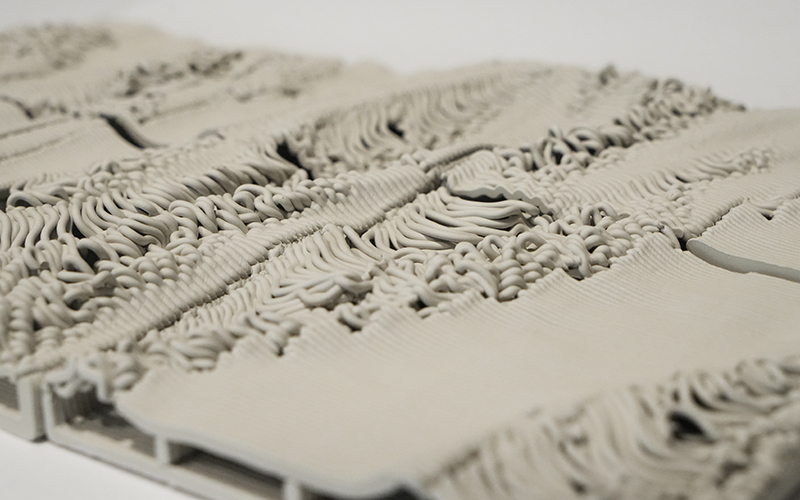 Fig_1 Printed pieces.
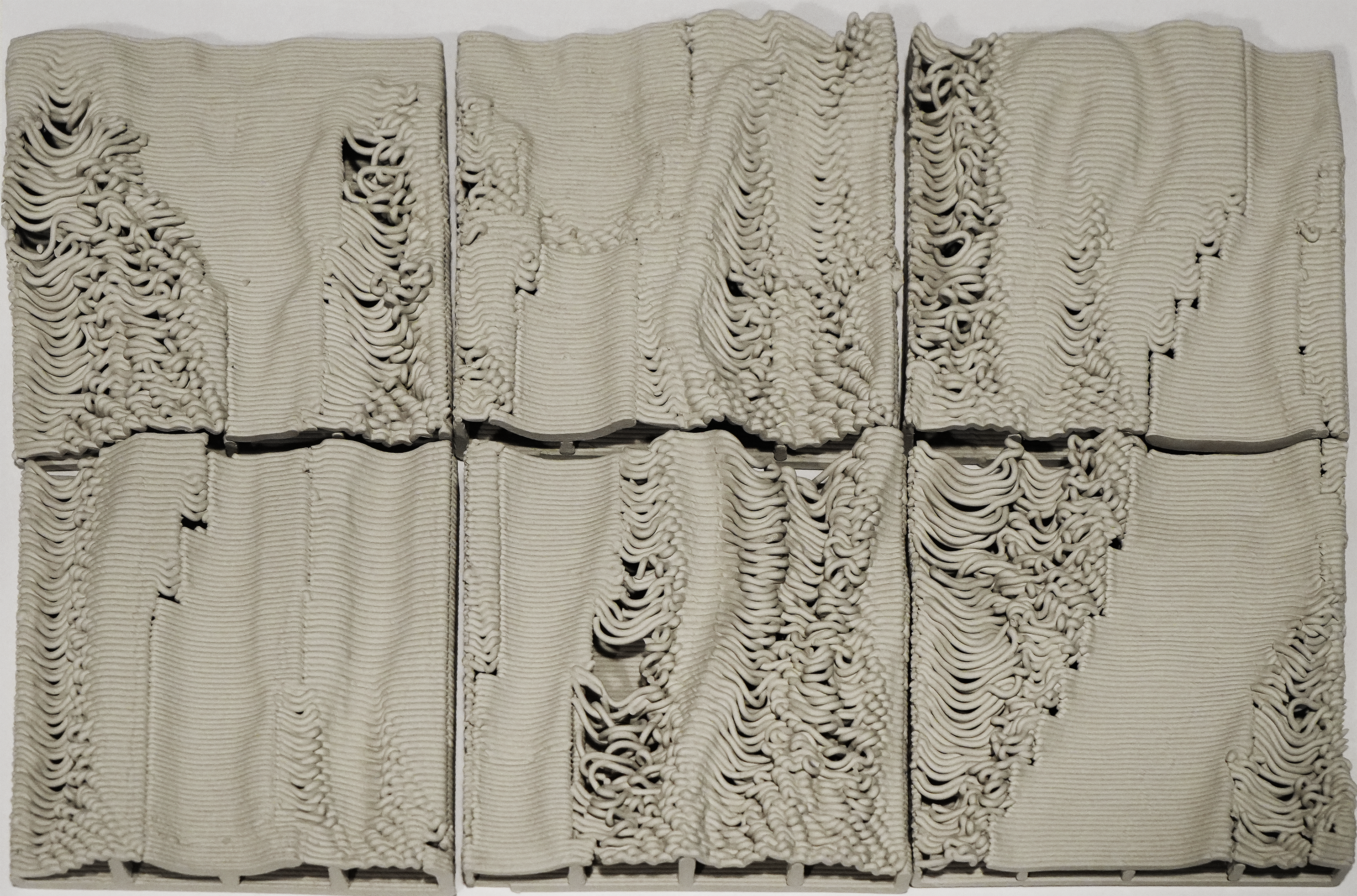 Fig_2 Printed pieces.
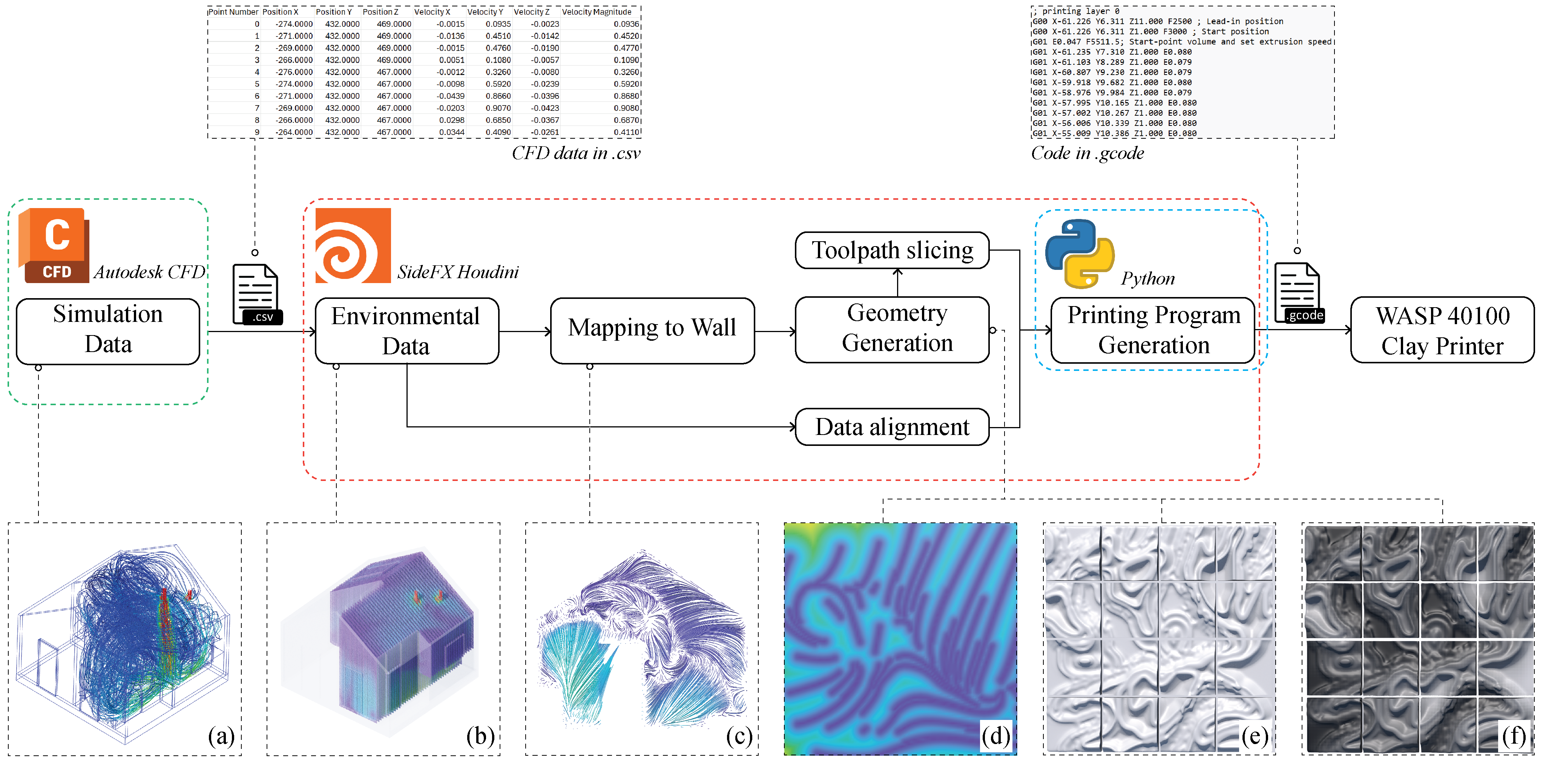 Fig_3 Diagram of generative framework: (a) trails of airflow in Autodesk CFD, (b) point cloud with CFD data in Houdini, (c) wall surface with proximate airflow trails, (d) interim visualisation of airflow data, (e) generated design geometries, (f) geometries with grey scale refers to airflow speed.
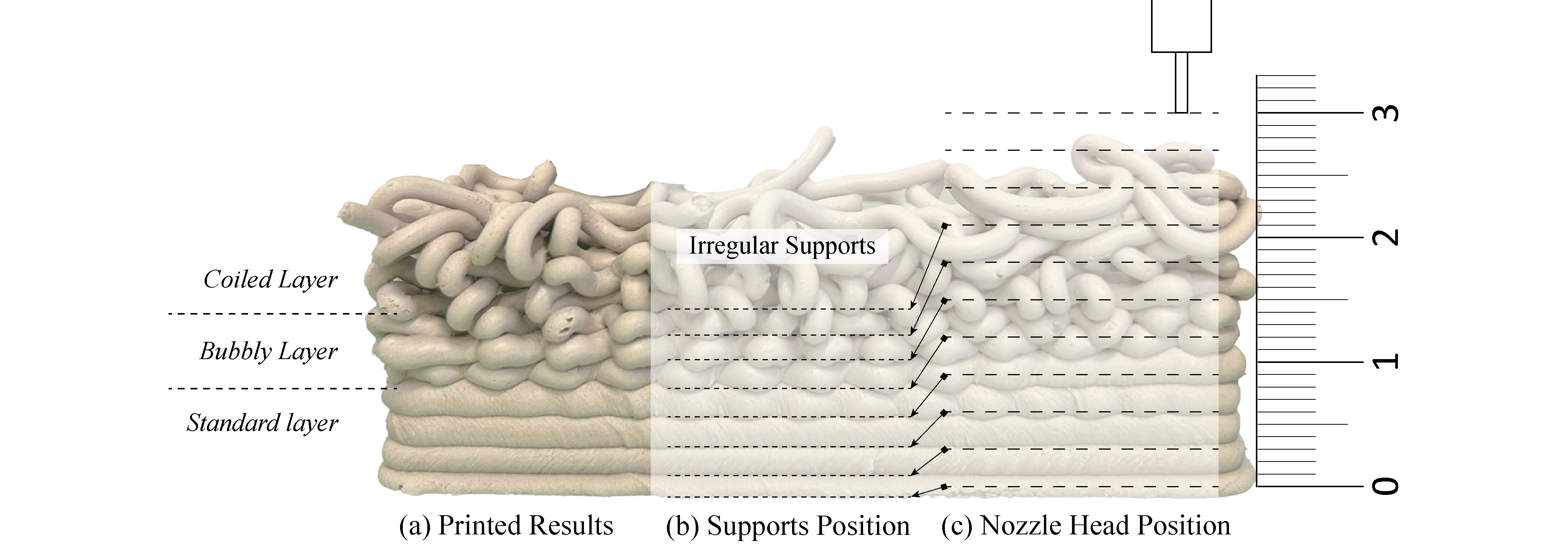 Fig_3 Gradient of print texture: (a) printed results, (b) printing supports position, (c) nozzle head position. The vertical distance between (b) and (c) increases linearly with printing layers, results in gradient textures from standard layer, bubbly layer, to coiled layer.
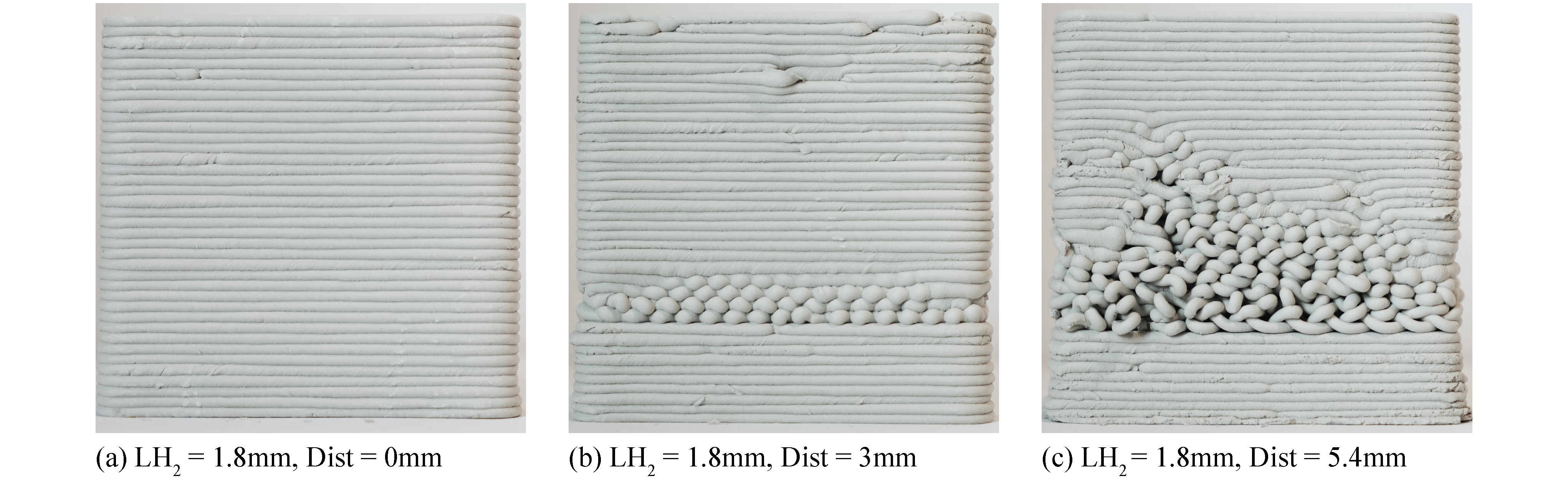 Fig_3 Configuration tests with layer height fixed (LH1 = LH2), distance between layer 10 and 11 (Dist) variates.
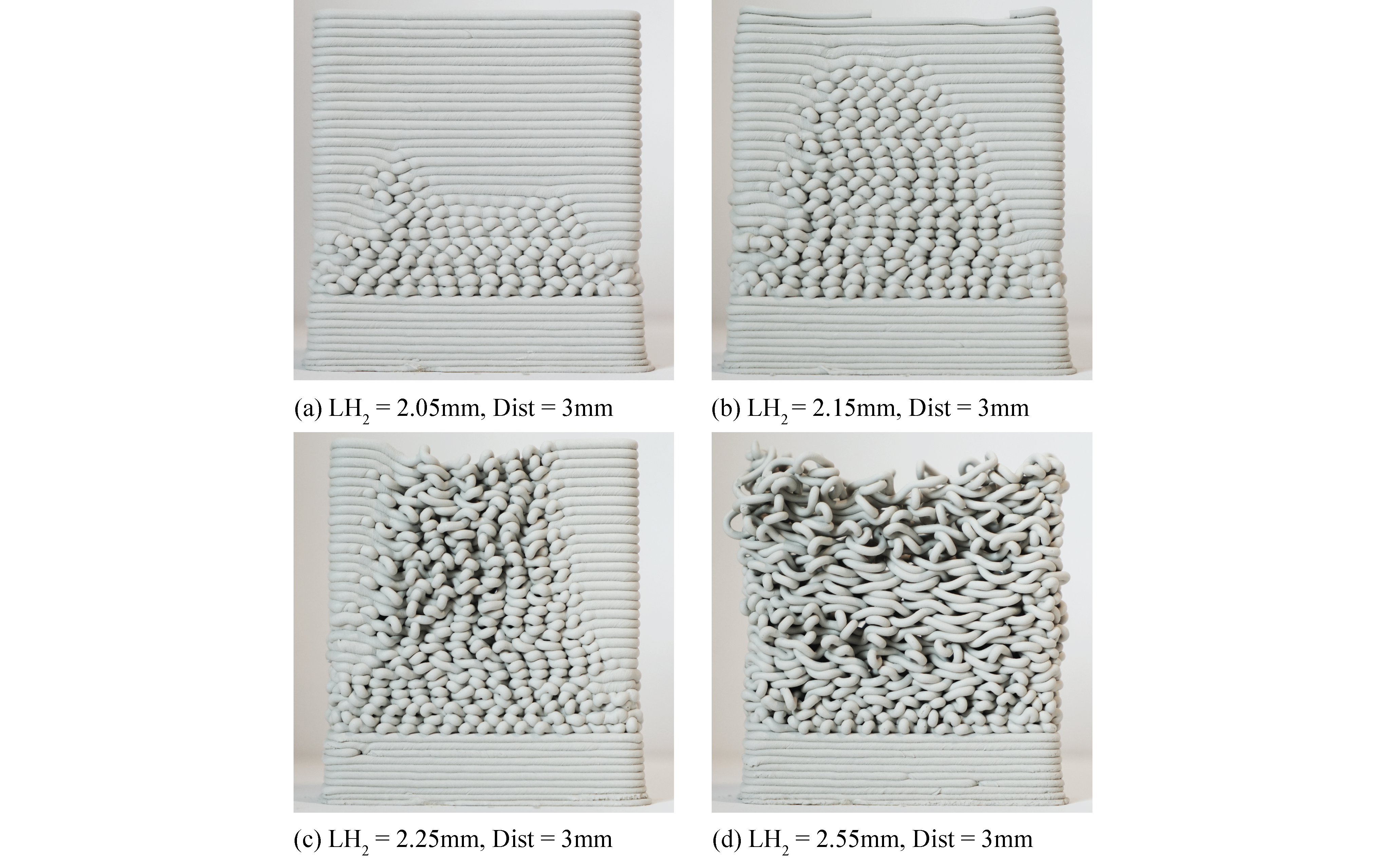 Fig_3 Configuration tests with layer height variated (LH1 = LH2), offset distance (Dist) between layer 10 and 11 fixed.